Why Liquid Drops Instead of Capsules?
Capsules and tablets are the most common supplement format because they're cheap to manufacture. They're not necessarily the most effective. A capsule has to pass through stomach acid, get absorbed in the small intestine, then travel through the liver (the "first-pass effect") before reaching the bloodstream. Significant portions of fat-soluble nutrients are lost along the way.
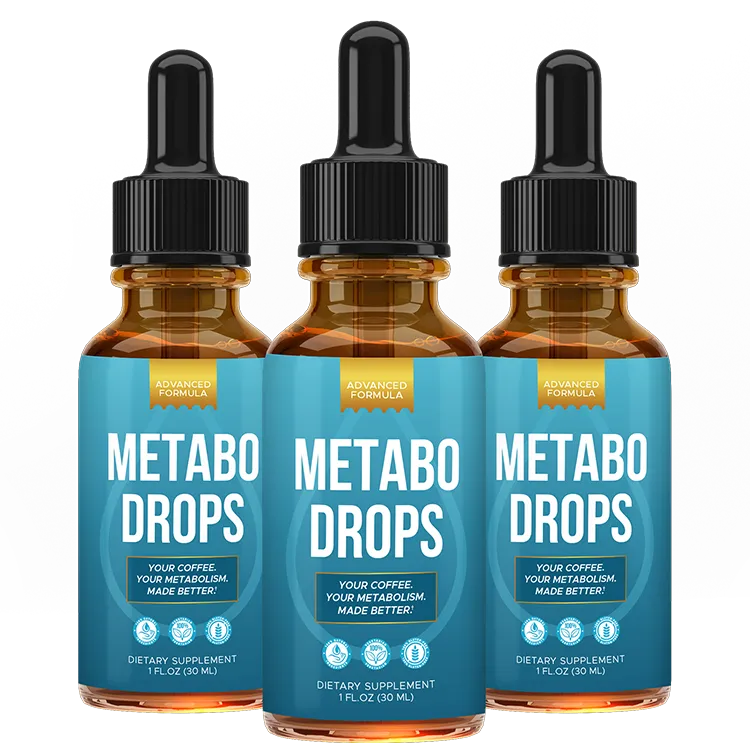
Liquid serums - like Metabo Drops - take a different route. The mucous membranes under the tongue are richly supplied with capillaries that connect directly to the systemic circulation. Nutrients placed under the tongue (or absorbed through the buccal lining) enter the bloodstream within minutes, with much less degradation. The remainder absorbs through the stomach lining when the coffee is swallowed.
Practical advantages of the liquid format
- Faster onset. Effects begin within 15-30 minutes versus 60-90 minutes for capsules.
- Higher bioavailability. More of each nutrient actually reaches circulation.
- Precision dosing. A drop is consistent; capsule filling can vary.
- No flow agents or fillers. Powders often contain magnesium stearate, silicon dioxide, or other manufacturing aids. Liquid serum needs none of these.
- Better stability. Properly formulated liquid serums resist oxidation better than powders, especially for sensitive compounds like green tea catechins.
The Six Nutrients and What Each Does
Chlorogenic Acid
The same polyphenol family that gives green coffee beans their metabolic reputation. In a 12-week trial published in the Journal of International Medical Research, chlorogenic-acid-enriched coffee reduced body mass in overweight participants compared to regular coffee (PMID 16545124). Mechanism: appears to modulate glucose absorption and insulin response after meals.
Camellia Sinensis (Green Tea Extract)
Green tea's catechins, especially EGCG, combined with caffeine, increased 24-hour energy expenditure and fat oxidation in a landmark American Journal of Clinical Nutrition study (PMID 17201629). A meta-analysis of 11 studies confirmed the weight-loss effect, though modest (PMID 19597519).
Chromium
An essential trace mineral most adult diets are low in. Supports insulin sensitivity and glucose handling - relevant for anyone with afternoon energy crashes, sugar cravings, or stubborn fat storage. A 2013 meta-analysis (PMID 24015681) found chromium supplementation supported small but statistically significant weight outcomes.
L-Carnitine
An amino acid derivative that shuttles fatty acids into mitochondria where they're burned for energy. Without enough L-carnitine, your cells struggle to access stored fat. A 2016 Obesity Reviews meta-analysis (PMID 26424790) showed L-carnitine supplementation significantly affected weight outcomes in adults.
L-Theanine
The smoothing agent. L-theanine - an amino acid from tea leaves - dampens caffeine's rough edges (jitters, anxiety, that wired-but-tired feeling) while preserving alertness. The result is calm, focused energy rather than the typical caffeine spike-and-crash (PMID 15331186).
Vitamin Complex
A balanced micronutrient backstop. The water-soluble B vitamins are particularly relevant to metabolism - they're cofactors in the enzymes that turn food into energy. Many adults eating restricted or processed diets run low on these.
Why the Order Matters
These six nutrients aren't selected at random. Chlorogenic acid and chromium work primarily on the front end - supporting glucose handling so calories from your meals don't spike insulin and get stored as fat. Green tea and L-carnitine work on the back end - mobilizing stored fat and supporting its oxidation for energy. L-theanine and the vitamin complex are the supporting cast - smoothing the experience and providing cofactors.
This is why Metabo Drops is positioned as metabolism support rather than a fat-burner. It addresses several leverage points in the metabolic system rather than overwhelming one. Stimulant-only formulas can produce dramatic short-term weight loss but rarely produce durable results. Multi-pathway formulas tend to produce smaller weekly changes but more consistent long-term outcomes.